致未來世代的美術史—臺灣美術以人為本的共融之路
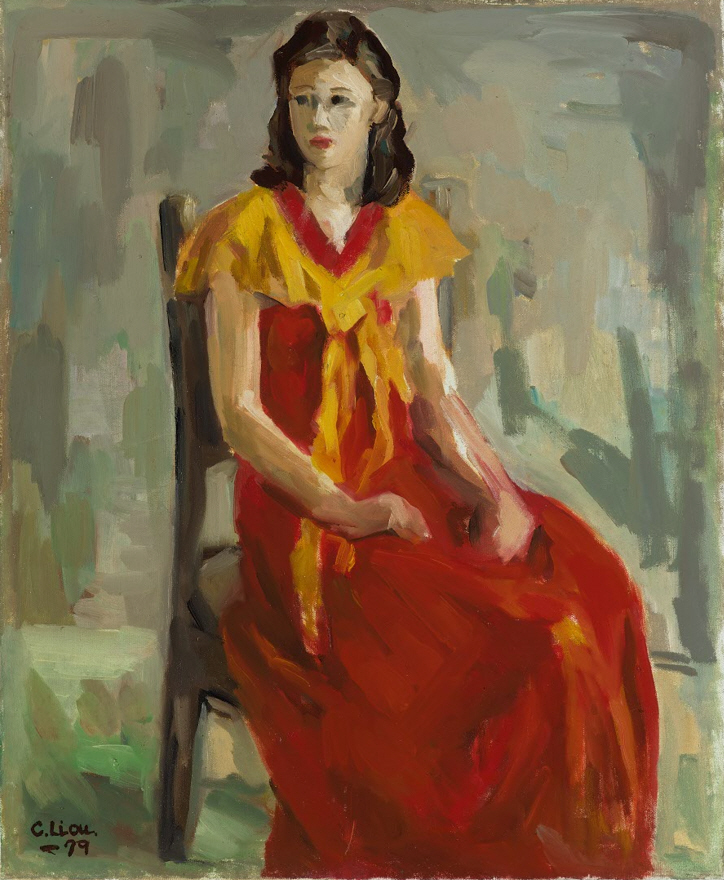
〈紅衣女郎〉畫作資訊與口述影像
〈紅衣女郎〉
劉啟祥
1979
油彩、畫布
60.5*49.5公分
畫作口述影像
劉啟祥在1979年創作的油畫〈紅衣女郎〉。長60.5公分,寛49.5公分。
畫面中央是一位穿著紅衣的年輕女郎,她坐在有靠背的木頭椅子上,自然地看著旁邊。女郎留著微捲到肩膀的長髮,無袖的紅色長洋裝有寬大的裙襬,完全蓋住她的下半身。肩上一條黃色披肩在胸前鬆鬆地打結。雙手垂放在腿上。左手握著一件手掌大小、像是小皮包的暗紅色物體。光線從畫面右上方照射,在女郎的頭髮、臉龐和手臂上形成強烈的光影。
劉啟祥用明亮、高純度的色彩突顯中央的女郎,也用對比強烈的色彩表現光影明暗。背景則用彩度比較低的灰色、藍色、綠色、黃色等顏色相互調和。他作畫的油彩濃重、用色層次豐富,大膽的粗線條大筆塗抹。女郎的臉、頭髮、四肢及衣著,都是反覆堆疊油彩形成大塊面的形體,沒有刻意勾勒的輪廓線。遠看這幅畫作,覺得主體鮮明、立體;近看卻能發現許多又寬又長的筆觸,以及堆疊油彩形成肌理的質感。
劉啟祥出身臺南柳營的望族,年輕時曾經留學法國。他多次進羅浮宮臨摹19世紀後期知名畫家的人物畫,磨練紮實的技巧。加上當時巴黎的文化和現代藝術的潮流,都成為他後來創作的基礎。
Audio Description
Lady in Red Dress is an oil painting created by LIU Chi-Shiang in 1979. The painting is 60 centimeters tall and 49.5 centimeters wide.
In the center of the painting is a young woman in a red dress sitting in a wooden chair as she looks to the side. The young lady has wavy, shoulder-length hair. Her red dress is sleeveless with a large skirt that completely covers her lower body. She is also wearing a yellow shawl that is loosely tied at the front. Her hands lay resting on her lap. In her left hand, she appears to be holding a dark red object the size of her palm, perhaps a small handbag. The light is coming from the top right corner, creating strong contrasts of light and shadow on the young lady’s hair, face, and arms.
LIU Chi-Shiang uses bright and saturated colors to highlight the young lady in the center of the frame. He also uses strong colors to represent light, shadow, and contrasting brightness. For the background, he opted for a blend of low-saturation colors such as gray, blue, green, and yellow. He lathers on oil paint, layering on rich colors and bold lines to create thick strokes. The young woman’s face, hair, limbs, and clothing are large shapes without deliberate outlines that are created by repeatedly layering on oil paint. From a distance, the painting appears to have a strong, three-dimensional subject but closer observation reveals many thick and long strokes and a textured surface from the thick layers of paint.
LIU Chi-Shiang was born into a prestigious family in Liuying District, Tainan. He studied in France in his youth, often visiting the Louvre to observe and replicate late 19th-century portraits by renowned artists like Manet, Cézanne, and Renoir. His habit of replicating portraits coupled with the contemporary culture and modern arts of then Paris honed his techniques and laid the foundations for his future artworks.