致未來世代的美術史—臺灣美術以人為本的共融之路
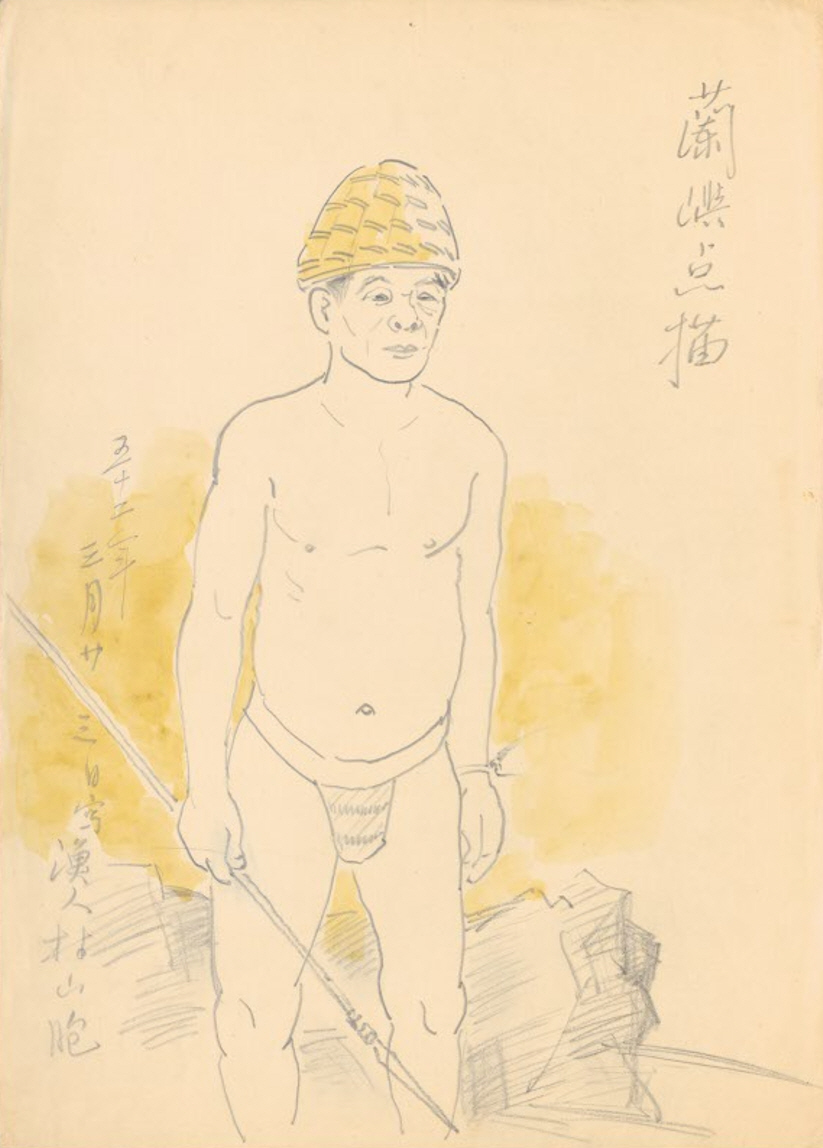
〈蘭嶼漁人村 人物〉畫作資訊與口述影像
〈蘭嶼漁人村 人物〉
林玉山
年代待考
淡彩
36*25.9公分
畫作口述影像
〈蘭嶼漁人村 人物〉是林玉山在紙張上用鉛筆及淡彩勾勒的人物素描。長36公分,寬25.9公分,創作年份仍待考據,可能是1963年。
這張素描的畫紙已經泛黃。中央有鉛筆線條勾勒出一位達悟族的男子。他站在低矮的岩石前,頭上戴著籐條編織的籐帽,穿著傳統藍白相間的丁字褲,手裡拿著一根細長的魚叉,左手手腕還戴著達悟族男子裝飾的手環。
林玉山用鉛筆畫下人物,再以一些短促的線條表現岩石的陰影、呈現立體感。最後再用黃色的淡彩在男子背後及籐帽上暈染,彷彿表現陽光照耀。素描的線條簡單,卻能反映出男人的像貌、四肢的肌肉線條和小腹略微中廣的身形。因為是寫生紀錄,林玉山用鉛筆在畫面兩側註記:蘭嶼點描,以及五十二年三月廿三日寫漁人村山胞的字樣。
林玉山是臺灣重要的前輩畫家。他一生習慣大量寫生,把寫生紀錄的稿件作為未來創作的參考素材。〈蘭嶼漁人村 人物〉是他在蘭嶼速寫風景和人物的素描紀錄之一,讓我們有機會觀察林玉山如何寫生、留下繪畫素材,也紀錄了當時達悟族人的穿著打扮,反映臺灣原住民族的人文風土,為未來世代留下記憶與文化資產。
Audio Description
Lanyu Fishing Village Figure is a sketched portrait drawn by LIN Yu-San on paper with pencil and wash watercolor. The artwork is 36 centimeters tall and 25.9 centimeters wide. The exact year the artwork was created is still unknown, but it may have been created in 1963.
The paper has already yellowed over time. At the center, LIN Yu-San has outlined a Tao male in pencil. The man is standing in front of a short rock. He is wearing a woven rattan hat and breechclout in traditional blue and white stripes. In his right hand, he is holding a long fishing spear. His left wrist is adorned with a traditional Tao bracelet for men.
LIN Yu-San used a pencil to draw his subject and then short lines to represent the shadows of the rock, making it more three-dimensional. Then, he washes behind the man and on his rattan hat with yellow watercolor to represent sunlight. The lines are simple but depict the man’s features, the muscles on his arms and legs, and his slightly protruding belly. As the drawing was a sketch, LIN Yu-San wrote annotations on both sides of the drawing in pencil. The notes were “Lanyu Sketch” and “Sketch of indigenous man from fishing village on March 23, 1963.”
LIN Yu-San is an eminent Taiwanese artist. He was a prolific sketcher, using his sketched drafts as materials for future artworks. Lanyu Fishing Village Figure is one of his landscape and portrait sketches from Lanyu that offers us insight into how he sketches and preserves his drawings and also documents contemporary Tao apparel. It showcases the culture and customs of Taiwan’s indigenous peoples and conserves memories and cultural assets for future generations.